If you're new to this blog, you can start with the introduction here.

Saturday, July 1, 2017

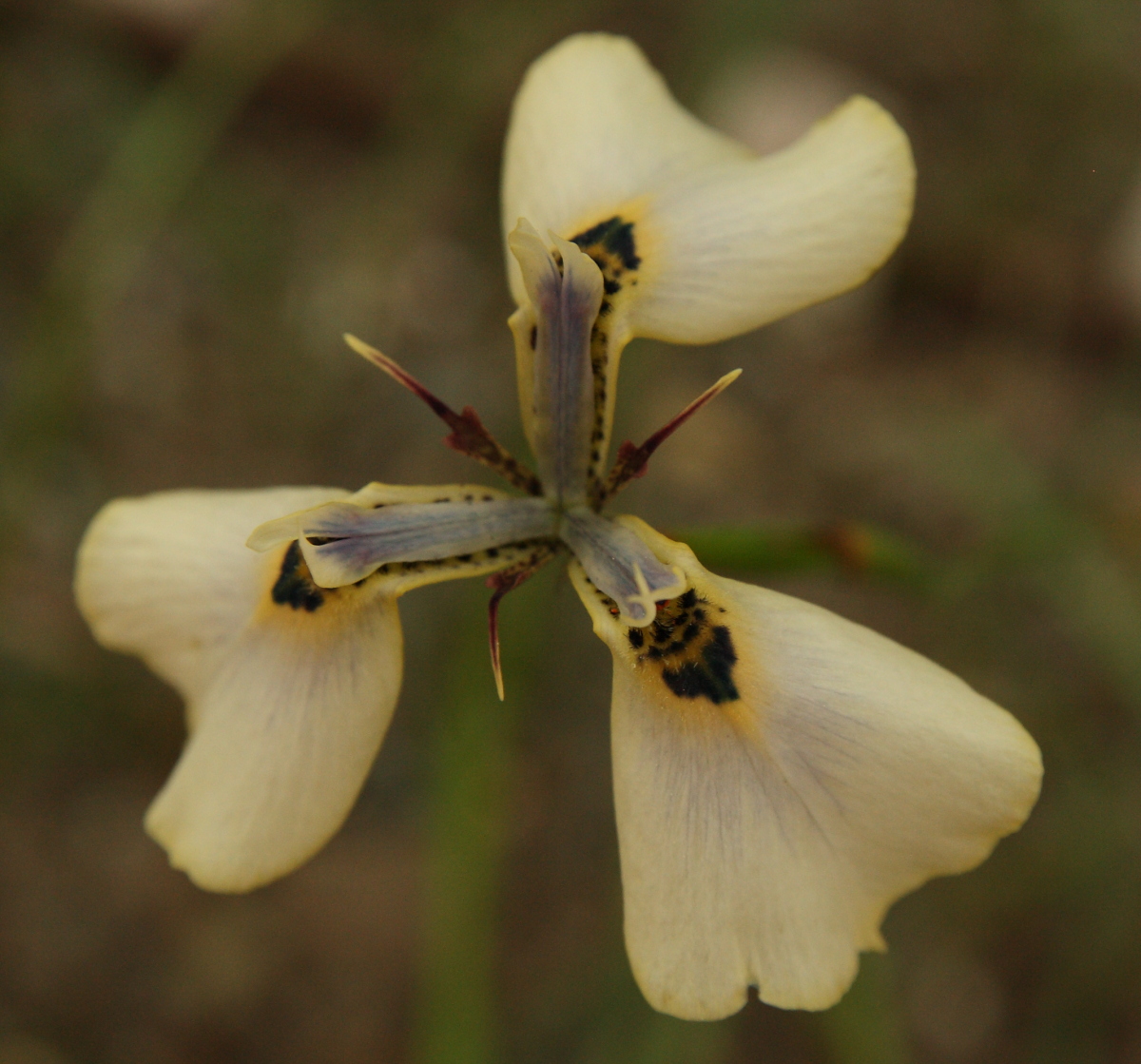
Moraea MM 14-187

Seed parent: Moraea villosa form F

Pollen parent: Moraea atropunctata


There's a typical pattern to villosa – atropunctata hybrids:
-The central cup is clear at the outer edge but dark in the center.
-The eye is narrower than in villosa.
-The tepals are wider than usual in villosa.
-And there isn't any sign of spots from M. atropunctata.

That same pattern shows up in these hybrids, with one exception.

MM 14-187a. Nice blue eye.

The eye in the photo below has a different shape, but the photo was marked form A, so I'll leave it here for now.

MM 14-187b. 


MM 14-187c. This one has some spots and streaks in it.

MM 14-187d.

MM 14-187e

Moraea MM 14-184

Seed parent: Moraea neopavonia with blue eye

Pollen parent: Moraea calcicola


Hurrah, another first-time species cross! As usual, mixing orange and purple produces pale orange. The F2 crosses from this should be more interesting. The corms of this cross are very vigorous, offsetting heavily and blooming a year earlier than many other crosses

MM 14-184a. The colors are bland, but I like the elegance of this flower. It's worthy of further crosses.


MM 14-184b. 


MM 14-184c.

Not sure if this is the same as form c, or something different.


Moraea MM 14-161

Seed parent: MM 03-99 (M. neopavonia X villosa)

Pollen parent: Moraea neopavonia 'Summerfield'


I love the intense orange color of this hybrid, but it's disappointing that the eye is black.

MM 14-161a.


Moraea MM 14-141

Seed parent: Moraea tripetala

Pollen parent: MM 99-00a (M. atropunctata ? X neopavonia)


As soon as you see the flowers you can tell that M. tripetala is one of the parents. The needle-like inner tepals are a dead giveaway. I was hoping that crossing a half-orange hybrid with the purple M. tripetala would give me a mauve-red flower, but instead I got just about every other color.

MM 14-141a.


MM 14-141b

MM 14-141c

MM 14-141d. I like the stripes on this one.

MM 14-141e


Moraea MM 14-139

Seed parent: Moraea neopavonia with blue eye

Pollen parent: Moraea neopavonia 'Summerfield'


In addition to my obvious obsession with Moraea hybrids, I'm doing my best to keep the various species alive in my collection. As part of that process, I crossed M. neopavonia 'Summerfield' with my other favorite M. neopavonia clone. The hybrid came out looking almost identical to 'Summerfield,' which probably tells me something about the genetics of these two selections. But I'm not sure what.

MM 14-139. This cross produced a large number of vigorous seedlings, but they all look almost identical, so I didn't bother assigning them all letters. This particular flower was a little battered due to weather.

MM 14-139a. This one looks more like the non-Summerfield version.

MM 14-139b. This one has mysterious silver-blue eyes.

14-139c


Moraea MM 14-134

Seed parent: Moraea 'Zoe' offspring

Pollen parent: MM 11-161b ((M. atropunctata? X neopavonia) X (neopavonia x villosa))


Darn. I was hoping for something reddish and spotted, and instead I got something orange and plain. I do like the contrast between the dark orange central cup and the light orange of the rest of the tepal.

MM 14-134a.

Moraea MM 14-94

Seed parent: Moraea atropunctata

Pollen parent: MM 11-35a  ((atropunctata x neopavonia) x villosa c) X (atropunctata x neopavonia)


This is funny. When I made the cross I was wondering how the warm purple color of the pollen parent would combine with the spots of Moraea atropunctata. To my surprise, the flowers came out almost very different. They're handsome and look suspiciously like the seed parent at first glance. However, the purple spots on the backs of the flowers are not atropunctata, and there's enough other variation that I'm pretty sure they're hybrids.

MM 14-94a. This flower looks very, very much like pure M. atropunctata. But the flowers are larger and taller than is typical for the species, and the tepal blacks have blue spots instead of brown, so I'm pretty sure it's a hybrid (and a nice vigorous one).


MM 14-94b

MM 14-94c

MM 14-94d

MM 14-94e. No way this is the species.


MM 14-94f. I like the pale orange color of this one, although how I got that from a cross between a white and purple flower, who knows...

The flower below is in the process of wilting. You can see the dots on the backs of the tepals, and the orange color has mostly faded to white.